
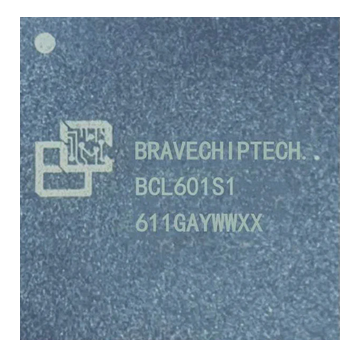
Bravechip’s BCL601S1 employs Nordic Semiconductor’s nRF52840 SoC to run its ECG algorithm engine and transmit the acquired data via Bluetooth LE
Dedicated to providing ‘chiplet’ chip-scale solutions to the AIoT market, Bravechip has launched a miniaturized module designed for use in medical devices that supports electrocardiogram (ECG) readings. With a form factor of just 9 by 9 mm, the ‘BCL601S1 Bluetooth ECG Chiplet’ offers motion state detection, as well as heart rate and heart rate variability (HRV) calculations. It can be used in a variety of Bluetooth® LE ECG product designs, such as dynamic ECG recorders, ECG patches, ECG watches, and ECG suits.
Powerful processing capability
The BCL601S1 is powered by Nordic Semiconductor’s nRF52840 SoC, and includes an ECG Analog Front-End (AFE), a G-sensor for collecting motion status, as well as 1 GB Flash memory for raw ECG data. Once this data has been collected it can either be downloaded from the device via USB, or using the Bluetooth LE connectivity of the Nordic SoC.
Low power benefits
“The low power consumption of the chip was also a major drawcard. The BCL601S1 module can be powered either by rechargeable lithium batteries or coin cell batteries, and can achieve a power consumption of less than 0.5 mA in acquisition, transmission, and storage modes.”
This reduced power consumption is made possible thanks, in part, to the ultra low power operating characteristics of the Nordic nRF52840 SoC. The nRF52840 SoC has been engineered to minimize power consumption with a fully-automatic power management system.
“We employed the Nordic SDK [Software Development Kit] and made use of the driver library when creating our application code,” says Jin. “We found that these rich reference designs, the over-the-air [OTA] firmware upgrade capability, and Nordic’s mature Bluetooth ‘stack’ helped make development faster and easier.”
Bravechip has also released its 4 by 6 mm ‘BCL603S1’ chiplet designed for use in smart health rings. The BCL603S1 is powered by Nordic’s nRF52832 SoC and provides heart rate, blood oxygen, temperature, step, sleep and other physiological sensor data. The ultra-low power consumption of the nRF52832 SoC ensures the chiplet can power a smart ring for up to seven days between recharge.
Related Articles

Easy and low-cost to install sensors hold promise for mass monitoring of indoor aerosol transmission risk for Covid-19
CO2 Monitoring to Lower the Coronavirus Threat By Graham Martin, CEO and Chairman, EnOcean AllianceThere is increasing evidence that carbon dioxide levels in buildings correlate strongly with the airborne spread of infection. Consequently, CO2 monitors could act as...
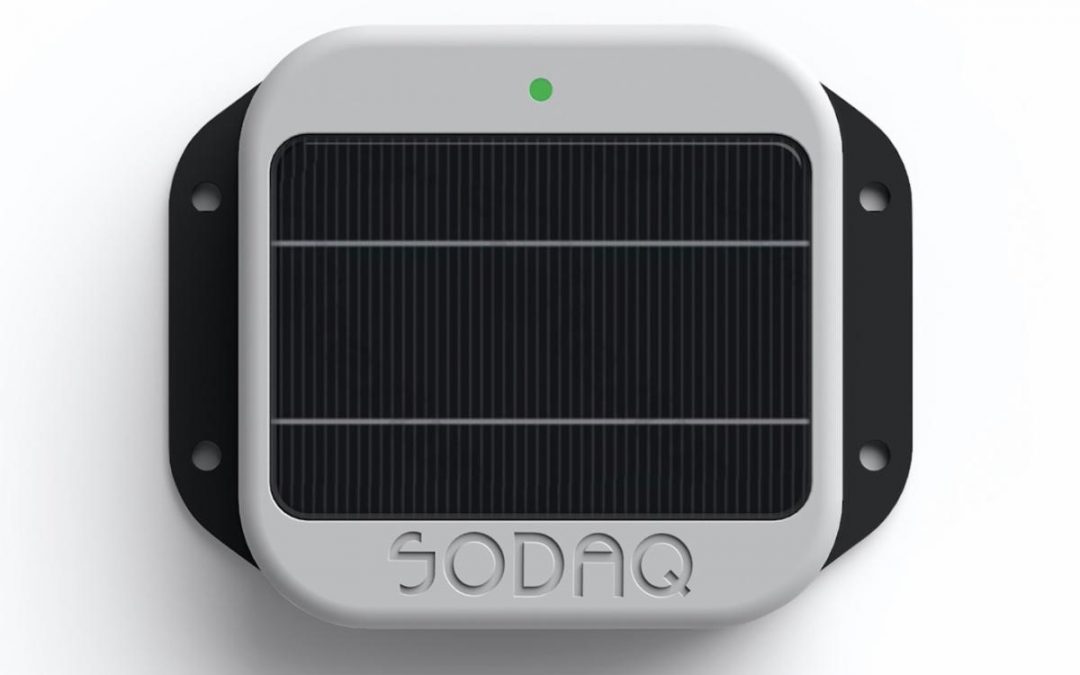
World’s first solar-powered cellular IoT asset tracker
Batteryless version can operate perpetually on harvested solar energy aloneNordic Semiconductor tells us that Dutch engineering and design specialist, SODAQ, is using a Nordic multi-mode NB-IoT/LTE-M nRF9160 System-in-Package (SiP) in what is claimed to be the world’s...

Verizon, Ericsson and Qualcomm first to achieve 5G peak speed of 5.06 Gbps
Advancements in 5G technology using carrier aggregation technology on mmWave spectrum Verizon, Ericsson and Qualcomm Technologies, Inc. have teamed up to demonstrate 5G peak speeds of 5.06 Gbps. Using 5G mmWave spectrum with carrier aggregation, a technology that...
Stay Up to Date With The Latest News & Updates
Our Sponsors
Incisor.TV partners with leading organisations in the technology sector.



Follow Us
And stay up to date with our news! We are active across the key social media platforms – please do follow us!
0 Comments