

Says ultra-efficient chipset offers significant performance improvements for low-power long-life IoT applications
According to data from the GSMA, the world will see 3.2 billion cellular IoT connections in 2024. Qualcomm Technologies has announced what the chip company describes as a breakthrough new product to drive the growth of cellular IoT: the Qualcomm 212 LTE IoT Modem, which is claims is the world’s most power-efficient single-mode NB2 (NB-IoT) chipset.
Power efficiency is a top concern for IoT devices that have to last for years in the field. Requiring less than one micro-amp (1uA) of sleep current, the Qualcomm 212 LTE IoT Modem’s chipset architecture allows for extremely low average power consumption. To support a wide range of batteries and longer life span of the device in the field, the modem couples ultra-low system-level cut-off voltage with provisions for adapting power usage according to varying source power levels – allowing end devices with power supply levels as low as 2.2 volts.
“The Qualcomm 212 LTE IoT Modem will help usher in a new era for a range of IoT applications around the globe, especially those requiring connectivity deep within buildings combined with low power use, like battery-powered IoT devices that need to operate for 15 years or longer in the field,” Vieri Vanghi, vice president, product management, QUALCOMM Europe told Incisor. “Its ultra-low power consumption, compact form factor, and low cost will greatly benefit OEMs creating the next generation of low-power IoT devices.”
The 212 LTE IoT Modem supports single-mode 3GPP Release 14 Cat. NB2 IoT connectivity, anticipated to enable extended coverage for delay tolerant applications on RF frequency bands spanning from 700MHz to 2.1GHz for Global roaming. Housed in a single-chip solution including modem baseband, application processor, memory, RF transceiver with fully integrated RF front end, and power management units, the modem enables LTE modules below 100 square millimeters in size. Qualcomm suggests that its high level of integration with few external components not only results in a low-cost Bill of Materials, but also facilitates quicker module design enabling faster commercialization time for OEMs. Thanks to its integrated ARM Cortex M3 application processor, and the native set of IoT data networking protocols, the Qualcomm 212 LTE IoT Modem can enable embedded IoT applications. Qualcomm Technologies is also launching an SDK for use with the Qualcomm 212 LTE IoT Modem, which is designed to support developers in running custom software on the integrated applications processor, with an expectation to offer pre-integrated support for cloud platforms such as the Microsoft Azure IoT SDK.
The Qualcomm 212 LTE IoT Modem is expected to be commercially available in the second half of 2020.
Related Articles

Murata’s RFID technology helps Bayer revolutionise transparency of its pharmaceutical supply chain
Pioneering project has enabled Bayer to gain real-time visibility over its distribution processesMurata ID Solutions has helped life science giant Bayer’s Italian division, Bayer S.p.A., leverage radio frequency identification (RFID) tracking in what the two companies...
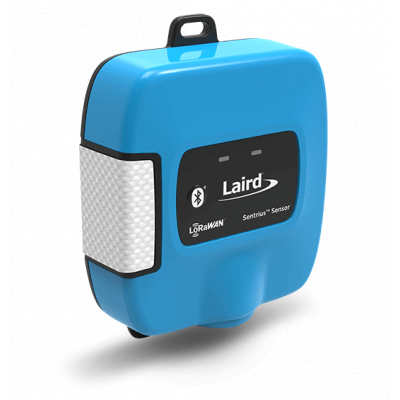
Laird adds LoRa-Enabled Sensors
Sensor variants support LoRaWAN regions AU915-928 and a growing number of countries in the AS923 region The Sentrius RS1xx temperature and humidity sensors from Laird enable battery-powered, local and wide-area sensor applications using LoRaWAN and Bluetooth 4.2. The...
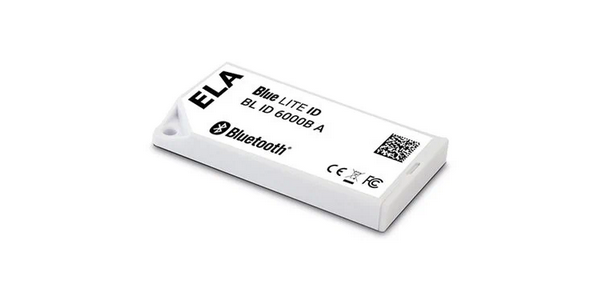
Rugged Bluetooth LE beacon tracks staff and assets across industrial worksites
ELA Innovation’s Blue Lite ID beacon provides long range wireless connectivity up to 300 meters ELA Innovation, a Montpellier, France-based developer of wireless sensors and beacons, has selected Nordic Semiconductor’s nRF52832 Bluetooth Low Energy (Bluetooth LE)...
Stay Up to Date With The Latest News & Updates
Our Sponsors
Incisor.TV partners with leading organisations in the technology sector.



Follow Us
And stay up to date with our news! We are active across the key social media platforms – please do follow us!
0 Comments