
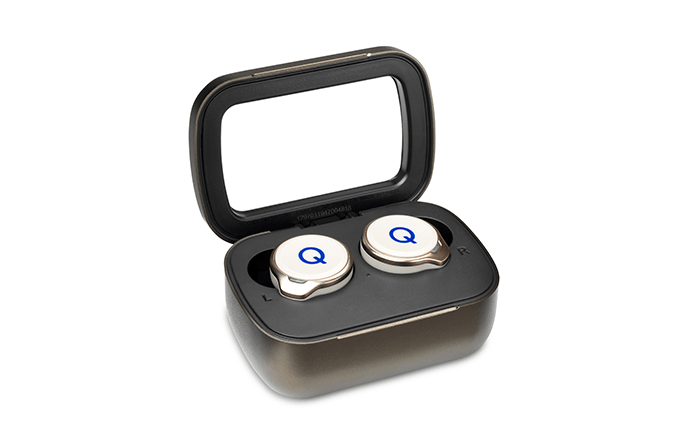
Qualcomm shows occluded earbud reference design
Qualcomm’s State of Play Report 2020 showed that 73 percent of those surveyed are now interested in complete freedom from wires, and adoption of truly wireless earbuds has almost doubled from 23 percent to 42 percent year on year. While sound quality is still the number one purchase driver, the data shows that consumers also demand more richly featured devices that offer seamless user experiences, are comfortable to wear, and have extended battery life.
Qualcomm recently launched a reference design platform for occluded true wireless earbuds. Based on the QCC5141 Bluetooth Audio SoC, it brings together earbud form factor hardware, software solutions, and tuning tools.
Designed to support seamless user experiences
Qualcomm believes that true wireless earbuds are being used more often, for longer periods of time, and for a wider range of applications, including music listening, voice calls, and mobile gaming. As consumers become more familiar and reliant on true wireless earbuds, expectations around ease of use and overall user experience are rising. Its research showed that many users are expressing an increasing interest in improved interoperability between wireless earbuds and their smartphone, with 35 percent of respondents rating their interest as “high” or “extreme.” Another feature they really care about when using wireless audio devices is the robustness of the Bluetooth connection. In fact, nearly a quarter of those surveyed said that audio glitching or dropouts would be a purchase barrier.
The earbud reference design supports Qualcomm’s latest TrueWireless Mirroring technology which is claimed to help deliver a more seamless user experience and better overall connectivity to both earbuds. This means that when one earbud is connected to the phone via Bluetooth, the other bud mirrors the connection and can role swap when needed. For example, if the user removes the connected bud, the mirroring bud is designed to take over the connection to avoid any interruption of streaming music or an active voice call — with no action required by the user. Qualcomm TrueWireless Mirroring is also engineered to manage a single Bluetooth address, so only one device shows up when the user pairs their earbuds to a phone.

The earbud reference design includes support for hybrid Qualcomm Active Noise Cancellation (ANC) technology. The dedicated ANC hardware is integrated onto the SoC and supports super-low latency leak-through of the outside environment, which allows the user to be aware of their surroundings in a natural way. For example, if you’re listening to music while out on a morning run, it’s important to hear oncoming traffic so you can stay safe; or, if you’re in the office, you need to be able to hear a colleague call your name or ask a question.
HD music listening and clear voice calls
Qualcomm told IncisorTV that its research shows that users are demanding much more from their true wireless devices in terms of functionality and experiences, one thing remains unchanged — sound quality is the number one purchase driver. To help manufacturers meet these expectations, the earbud reference design supports Qualcomm aptX Adaptive audio technology and Qualcomm cVc echo cancellation and noise reduction technology.
The earbud reference design is based on Qualcomms QCC5141 Bluetooth SoC, which is optimized for wireless earbuds and hearables and is apparently available now.
Related Articles

DECT Forum and Parks Associates partner to create ‘Market snapshot: voice as a lifeline and the transformation of home telephony’
Most of 2020 has been beset by the global Covid-19 pandemic. Workers have had to become used to working from home rather than their super-connected office environmentMost of 2020 has been beset by the global Covid-19 pandemic. During this time, when travel has been...

Easy and low-cost to install sensors hold promise for mass monitoring of indoor aerosol transmission risk for Covid-19
CO2 Monitoring to Lower the Coronavirus Threat By Graham Martin, CEO and Chairman, EnOcean AllianceThere is increasing evidence that carbon dioxide levels in buildings correlate strongly with the airborne spread of infection. Consequently, CO2 monitors could act as...
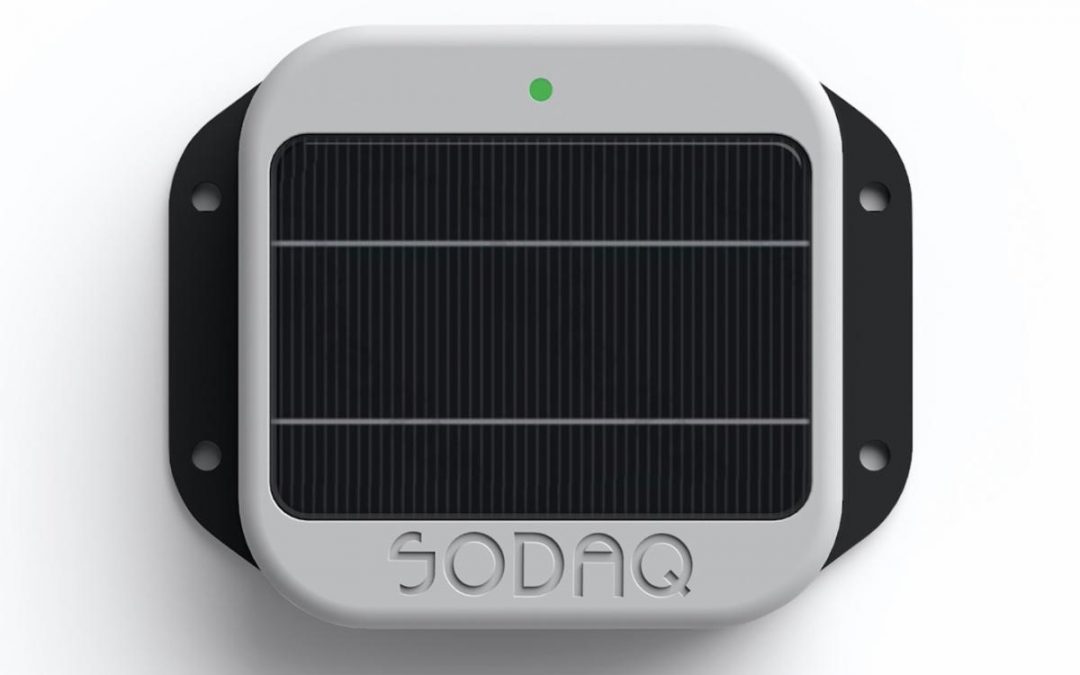
World’s first solar-powered cellular IoT asset tracker
Batteryless version can operate perpetually on harvested solar energy aloneNordic Semiconductor tells us that Dutch engineering and design specialist, SODAQ, is using a Nordic multi-mode NB-IoT/LTE-M nRF9160 System-in-Package (SiP) in what is claimed to be the world’s...
Stay Up to Date With The Latest News & Updates
Our Sponsors
Incisor.TV partners with leading organisations in the technology sector.



Follow Us
And stay up to date with our news! We are active across the key social media platforms – please do follow us!
0 Comments