
The European connected care industry is facing major changes that will reshape the competitive environment for solution vendors and service providers during the coming years
In its latest research, Berg Insight has found that around 8.6 million people in Europe were using connected care solutions at the end of 2021. The figure refers to users of traditional telecare, next-generation telecare and telehealth solutions in the EU27+3 countries. Until 2027, Berg Insight forecasts that the number of connected care users will grow at a compound annual growth rate (CAGR) of 12.1 percent to reach 17.1 million. Traditional telecare is currently the largest and most mature of the three market segments, but the next-generation telecare and telehealth market segments are expected to have a higher growth rate in the next years. Berg Insight expects that next-generation telecare will overtake traditional telecare solutions and become the largest segment with a forecasted 7.7 million users in 2027. Traditional telecare will follow with 7.5 million users and the telehealth segment will have an estimated 5.7 million users at the end of the forecast period.
The traditional telecare equipment market in Europe is highly consolidated. The two major players – Tunstall and Legrand – hold leading positions in nearly all markets even though they are challenged by local players such as Careium, TeleAlarm and Chubb. The next-generation telecare market is on the other hand more fragmented. In addition to the leading telecare equipment vendors, companies active in the next-generation market include specialised providers such as Essence Group, Everon, Vitalbase and Vivago in activity monitoring; Navigil, Libify, Oysta Technology, SmartLife Care and Smartwatcher in mobile telecare; and Evondos, Vitavanti, AceAge and iZafe Group in medication compliance monitoring. The telehealth market is similarly a fragmented market that is evolving quickly and includes both start-ups and well-established solution providers such as Huma, Luscii, Dignio, Comarch, eDevice and SHL Telemedicine.
.
The European connected care industry is facing major changes that will reshape the competitive environment for solution vendors and service providers during the coming years. One of the main developments is the ongoing digitalisation of telephone networks around Europe. Large-scale replacements of telecare equipment will be needed as analogue devices do not function reliably on digitalised networks. At the same time, the digitalisation enables new types of solutions that can advance the delivery of care to the next level. This includes next-generation telecare systems with new functions as well as integrated solutions that enable a combined delivery of telecare and telehealth services
“Care providers will start to offer more and more proactive and predictive services, by continuously analysing user data and acting on abnormalities. Such solutions rely on data not only from telecare devices, but also from other sources such as smart home sensors, healthcare records and connected medical devices”, said Samuel Andersson, IoT Analyst at Berg Insight. Another trend worth noting is the effect that the Covid-19 pandemic has had on the adoption of telehealth and remote patient monitoring solutions. “As lockdowns and quarantines were imposed all around the world, healthcare providers were motivated to adopt remote patient monitoring and telehealth solutions. This helped overcome some of the institutional hesitancy and conservatism that previously were major barriers for the adoption these solutions”, concluded Mr. Andersson.
Related Articles

Easy and low-cost to install sensors hold promise for mass monitoring of indoor aerosol transmission risk for Covid-19
CO2 Monitoring to Lower the Coronavirus Threat By Graham Martin, CEO and Chairman, EnOcean AllianceThere is increasing evidence that carbon dioxide levels in buildings correlate strongly with the airborne spread of infection. Consequently, CO2 monitors could act as...
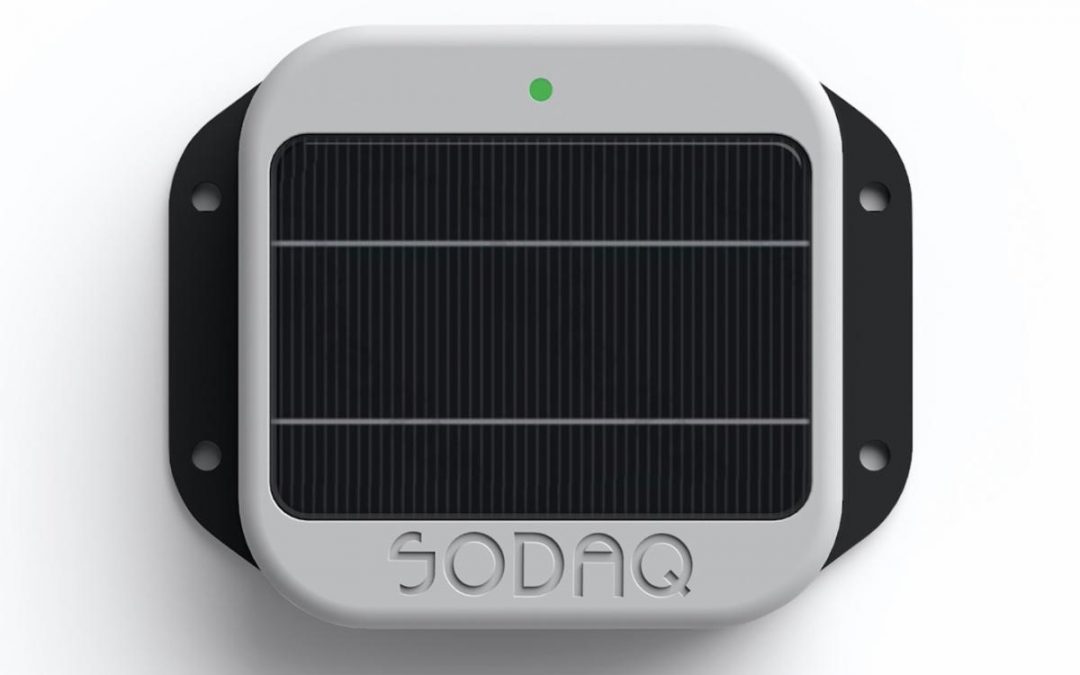
World’s first solar-powered cellular IoT asset tracker
Batteryless version can operate perpetually on harvested solar energy aloneNordic Semiconductor tells us that Dutch engineering and design specialist, SODAQ, is using a Nordic multi-mode NB-IoT/LTE-M nRF9160 System-in-Package (SiP) in what is claimed to be the world’s...
Verizon, Ericsson and Qualcomm first to achieve 5G peak speed of 5.06 Gbps
Advancements in 5G technology using carrier aggregation technology on mmWave spectrum Verizon, Ericsson and Qualcomm Technologies, Inc. have teamed up to demonstrate 5G peak speeds of 5.06 Gbps. Using 5G mmWave spectrum with carrier aggregation, a technology that...
Stay Up to Date With The Latest News & Updates
Our Sponsors
Incisor.TV partners with leading organisations in the technology sector.



Follow Us
And stay up to date with our news! We are active across the key social media platforms – please do follow us!
0 Comments