

IoT platforms provide middleware to connect and manage devices and integrate collected data into various applications and services.
According to a new research report from the IoT analyst firm Berg Insight, the global market for IoT device management and application enablement platforms was worth US$ 2.0 billion in 2019. Growing at a CAGR of 32 percent, yearly sales of device management and application enablement services are forecasted to reach US$ 7.9 billion in 2024. IoT platforms provide middleware to connect and manage devices and integrate collected data into various applications and services. These platforms are intended to reduce the cost and development time for IoT solutions by providing standardised components that enterprises can build upon.
Berg believes that the market for IoT device management and application enablement platforms is in a stage of transformation, where major cloud service providers such as Microsoft, AWS and Alibaba invest heavily to move up the stack. In many cases, vendors that have built IoT platforms on public cloud infrastructure are transitioning to providing higher-level building blocks that can be used as a starting point when building solutions and even end-to-end solutions for specific use cases. The increased concentration of the IoT platforms market, says Berg, is an overall healthy development for the IoT ecosystem and a sign of maturation.
Even though these hyperscalers are becoming increasingly dominant in the IoT platforms space, Berg suggests that there are segments of this market where specialised vendors play an important role. Fredrik Stalbrand, Senior Analyst, Berg Insight told Incisor, “Device connectivity and management services for low-power constrained devices comprise a key focus area for cellular IoT module providers such as Sierra Wireless and Telit, but also vendors like Pelion that was launched as a wholly-owned subsidiary of Arm in November 2020.” He mentioned AVSystem and IoTerop as other examples. A common theme for these players is that their device management solutions are compliant with LwM2M, a device management standard that has gained traction in the telecommunications industry with the emergence of the LPWA technologies LTE-M and NB-IoT. “Efficient and secure device management solutions are crucial to meet the requirements of massive IoT deployments in the 5G era”, concluded Mr. Stalbrand.
Related Articles
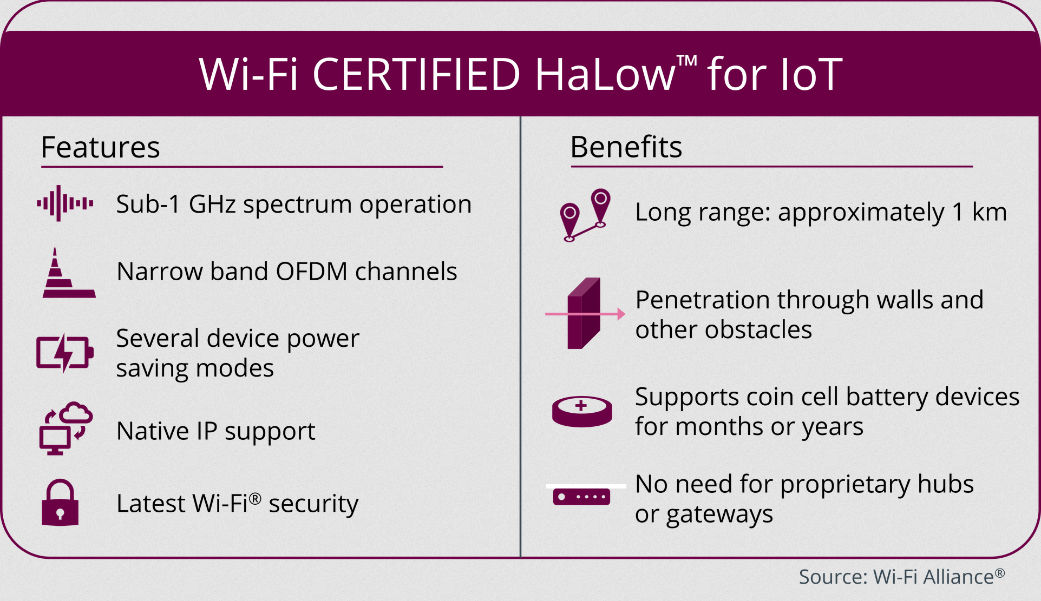
Wi-Fi CERTIFIED HaLow delivers long range, low power Wi-Fi
Wi-Fi Alliance: 'Secure, interoperable Wi-Fi expands connectivity for more IoT applications' The Wi-Fi Alliance has introduced Wi-Fi CERTIFIED HaLow – a certification program for products incorporating IEEE 802.11ah technology – to expand Wi-Fi applications for the...

Smart home ecosystem uses Nordic solutions for wireless control of appliances
Wonderlabs Limited’s SwitchBot uses nRF52840 and nRF51822 SoCs enabling devices to be controlled from smartphone app Technology company Wonderlabs Limited, has specified Nordic Semiconductor’s nRF52 and nRF51 Series Bluetooth Low Energy (Bluetooth LE) Systems-on-Chip...

NFC Forum launches Wayfinding Mark System
Increasing interoperability and improving the user experience of NFC connected applications and use cases The NFC Forum has developed a new global identifier to increase interoperability and improve the user experience of NFC connected applications and use cases. The...
Stay Up to Date With The Latest News & Updates
Our Sponsors
Incisor.TV partners with leading organisations in the technology sector.



Follow Us
And stay up to date with our news! We are active across the key social media platforms – please do follow us!
0 Comments