
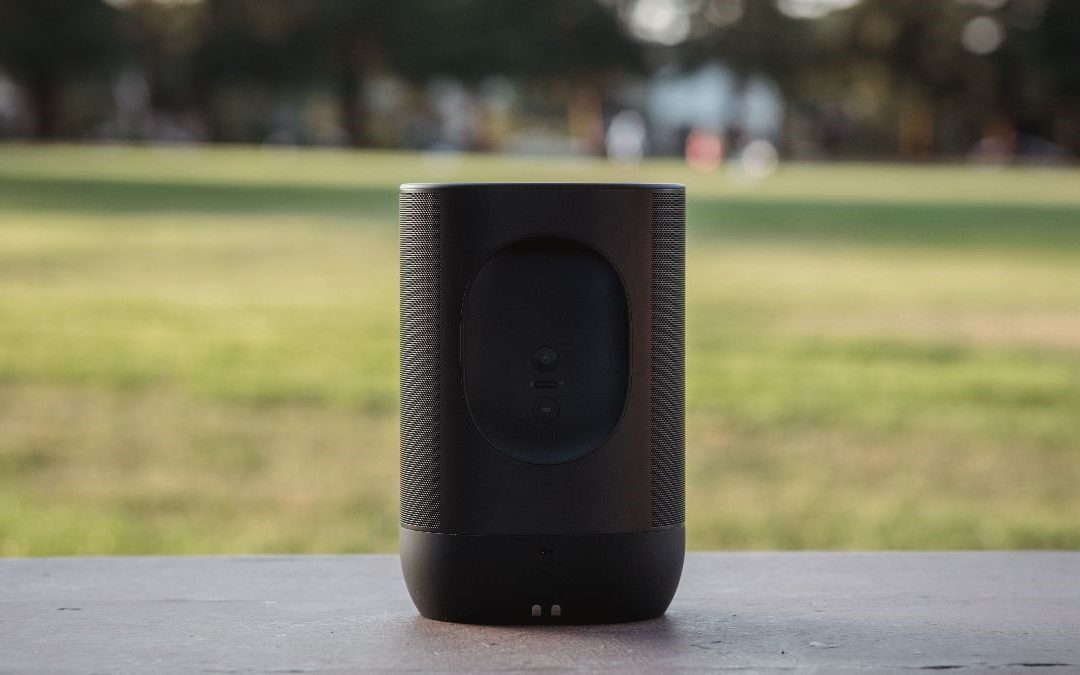
Voice assistants and LC3 help drive portable speaker market
SAR Insight & Consulting has published new research examining how a new Bluetooth codec and the rise of voice assistants are helping to drive the portable speaker market.
Voice-controlled portable speakers are enjoying a moment in the sun, says SAR, with almost 27 million units expected to ship in 2025, according to itslatest research.
While Google Assistant and Amazon’s Alexa are the most popular assistants—found in a range of devices, including Sonos, Bose and Logitech – SAR believes that there is scope for more assistants (Apple’s Siri and Samsung’s Bixby among others) to be integrated into future devices.
Another attractive feature for product development is the introduction of the new Bluetooth codec LC3, which will see battery life improve and form factors improve, giving rise to speakers that last all day while providing high quality sound reproduction.
“SAR predicts that there could be a rise in larger capacity batteries to keep up with additional functionalities such as voice control,” the report’s author Kian Rayment said. “However, integration of smaller capacity batteries will not drop completely due to the potential run time gains possible from the advent of LC3 in relation to sink devices.
“Furthermore, manufacturers may decide to use the space available from reduced battery storage, to further improve the already impressive designs for sound reproduction, a vital element of outdoor speaker design because of the acoustic drawbacks.”
Interestingly, while the market for voice-controlled portable speakers is expected to have a downward pressure on the non-voice-controlled speaker market, SAR forecasts that there will still be a demand from consumers who require devices with longer battery lives and no voice assistants.
For anyone looking for more detail, SAR Insight & Consulting’s report, ‘Portable Speakers: market growth, technology trends, forecasts and competitive analysis’, breaks the market down into different sectors and explains how the main players intend to develop their offerings, and how component suppliers are expected to benefit. Within the predictions, there has also been consideration of Covid-19, the coronavirus that disrupted the global markets in the first half of 2020.
Related Articles
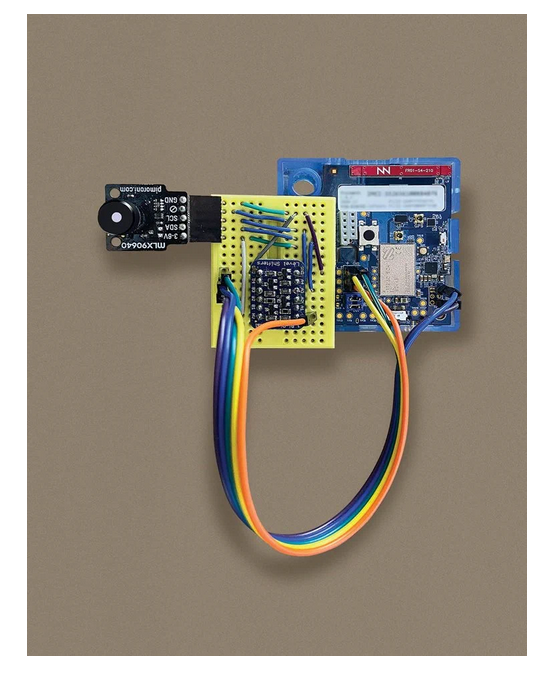
Thingy:91 winners promote sustainability in cellular IoT innovation
Electromaker contest winners demonstrated ideas for smart homes and cities using Nordic Thingy:91 prototyping platform An NB-IoT based environmental monitoring device for smart city applications, an LTE-M thermal sensor detecting kitchen activity, and an LTE-M ride...
Semtech Launches LoRa Cloud Locator Cloud Service
The new service enables customers to evaluate LoRa Edge, a chip-to-Cloud, ultra low-power geolocation platform Semtech Corporation, a supplier of high-performance analog and mixed-signal semiconductors and advanced algorithms, has announced its SaaS chip-to-Cloud...
Huawei cellular IoT licensing deal takes a big step towards industry-wide component-level licensing
Agreement means that all Nordic nRF91 Series LTE-M and NB-IoT products and therefore Nordic’s customers will be automatically licensed and protected Nordic Semiconductor has entered into a patent license agreement with Huawei Technologies Co., Ltd. The agreement...
Stay Up to Date With The Latest News & Updates
Our Sponsors
Incisor.TV partners with leading organisations in the technology sector.



Follow Us
And stay up to date with our news! We are active across the key social media platforms – please do follow us!
0 Comments